Member Engagement: 10 Creative Ideas to Excite Your Community

From events to online courses, your association provides a variety of content and activities for your members. However, these offerings only have an impact if your members actually engage with them. Even for associations with high participation rates, engagement can drop significantly in between major events.

To help your trade or professional association consistently engage its community, this guide will explore ideas and strategies to energize your members.

But first, let’s define exactly what member engagement means and why it matters.

What is Member Engagement?

Member engagement includes all the ways members interact with your association. When members attend events, comment on your blog posts, or message one another, they’re engaging with your association. Associations with high levels of member engagement tend to be dynamic, financially healthy, and positioned to expand their offerings.

Member management and member engagement are closely related concepts, and strong member management often helps facilitate positive engagement. The main difference is that member management focuses on organizing members by collecting data, managing dues payments, and planning activity logistics. With this foundation, your association can host engaging events, create engaging content, and encourage members to engage with one another.

Member Engagement Benefits

Members who sign up but don’t engage with your association may contribute to your dues revenue, but these individuals likely won’t stay members for long. By creating valuable content and promoting it to members, you can increase engagement and reap several benefits, including:

  • Higher Retention. Members who know what your association offers and are excited about it are more likely to stay members long-term. Conversely, low engagement is often a key sign a member is about to lapse.
  • Increased Revenue. The more activities your members participate in, the more they’ll spend. This might involve upgrading to a higher membership tier, buying event tickets, or purchasing your association’s products or services.
  • Better Recruitment. Professionals want to join associations that have lively networks, so they can expand their professional contacts. If your association has an active base of highly engaged members, new members are more likely to want to join to participate in your community.

Essentially, member engagement measures your association’s health. If you have high member engagement, your community is likely loyal, valuable, and eager for your next offerings.

10 Member Engagement Strategies

1. Maintain an online community.

Many associations host just a handful of events every year, and these organizations tend to see flagging engagement during the months between in-person meetups. Increase your memberships’ value and maintain engagement throughout the entire year by building an online community.

On your association’s website, provide access to an online platform just for your members behind your member login. To create this platform, invest in community engagement software for associations. These tools allow trade and professional associations to create personalized social media sites just for their members.

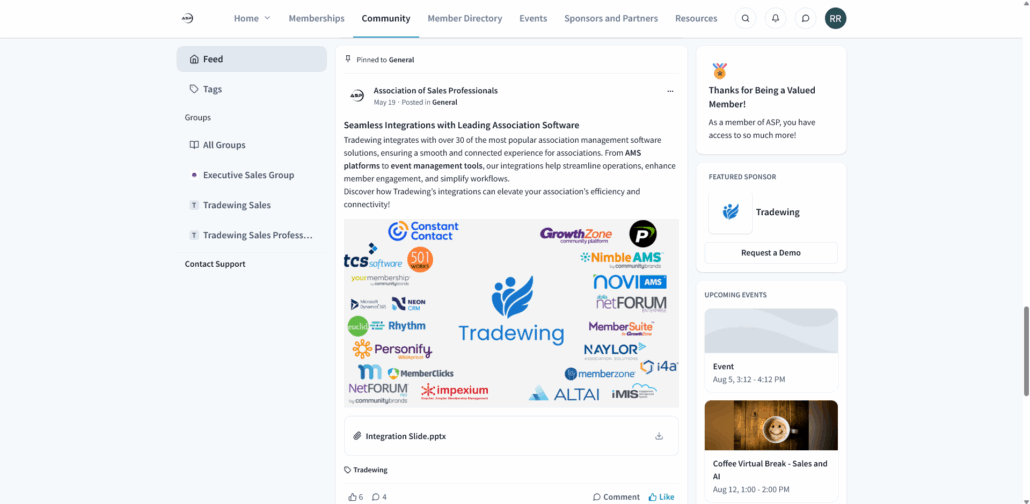
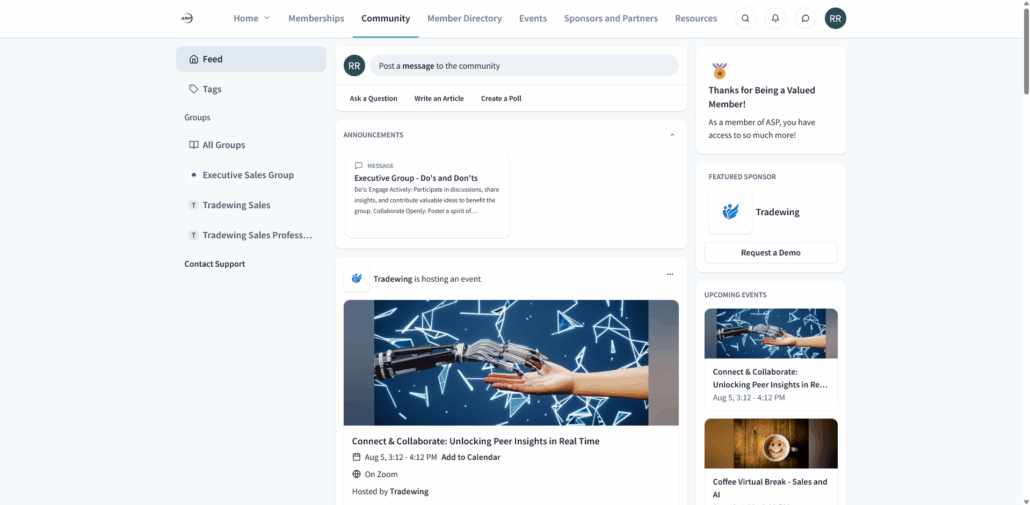
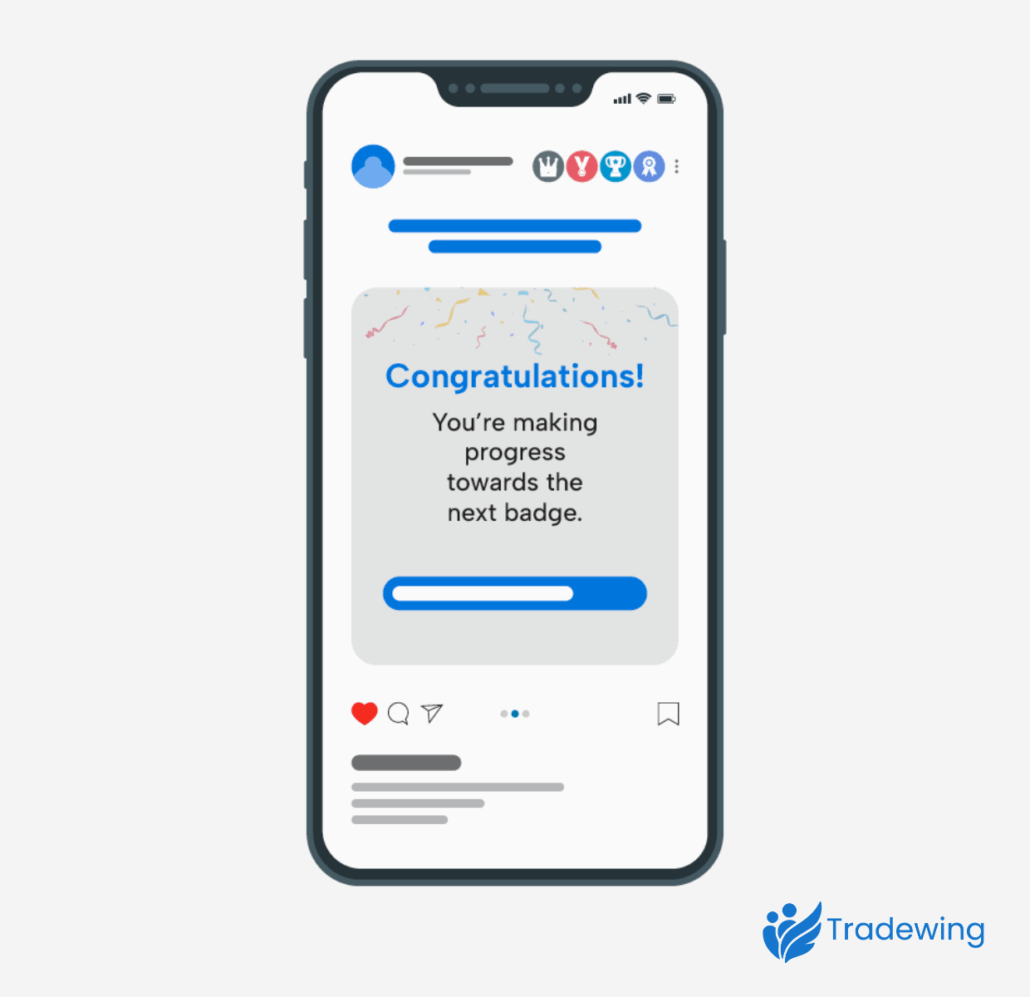
For example, here’s what Tradewing’s very own community engagement platform looks like:

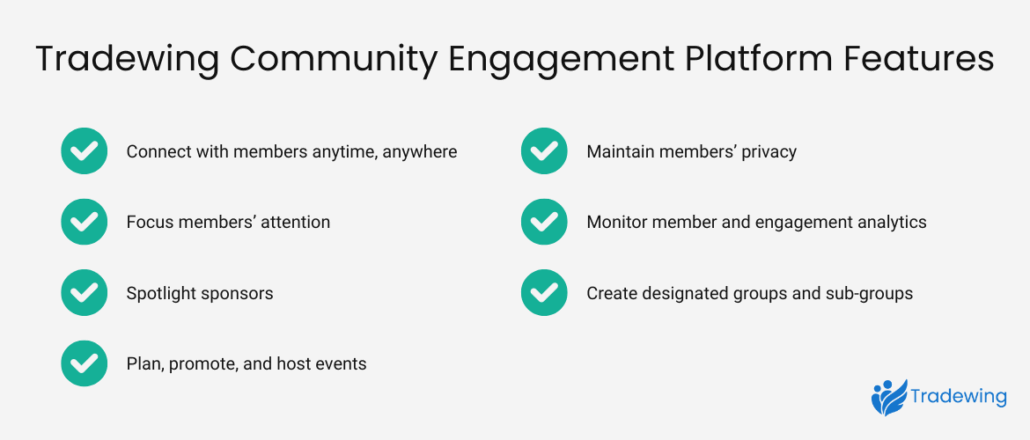
Platforms like Tradewing arm associations with several features for fostering lively online communities, such as:

  • Member feed. Your association’s staff and members can post content, comment on others’ posts, and scroll through a chronological timeline of the latest content. If there’s anything you need your members to see, your association’s team can create an announcement post and pin it to the top of all members’ timelines.
  • Groups. Members can reach out to one another and form groups where they can chat, plan events, and share. Tradewing’s platform allows users to create posts and schedule events that are visible only to their fellow group members. This means once members form connections, they can continue the conversation and arrange meet-ups right on your association’s platform.
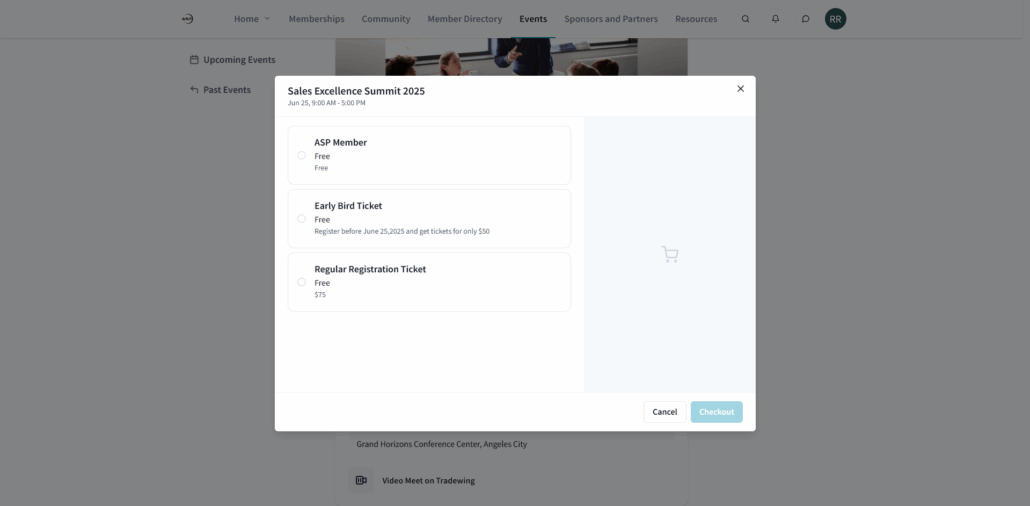
  • Event hosting. Expand your association’s offerings by hosting virtual events on your community engagement platform. Many community engagement platforms like Tradewing come with basic event management software, allowing you to announce, promote, and host events all in one centralized hub.

Popular rivals like Higher Logic and Hivebrite offer similar features but often cater to broader audiences or come with higher pricing, making Tradewing a more focused and cost-effective option for associations and professional groups. Alternatively, some associations use publicly available social media sites like Facebook to host their communities. However, there are several downsides to this compared to a specialized community engagement tool, such as:

  • Limited moderation. Platforms like Facebook offer group organizers some moderation tools, but these are severely limited compared to a platform your association controls. This applies not just to moderating discussions but also to protecting members’ privacy, fighting spam, and maintaining your association’s branding.
  • Decentralization. By sending members to a third-party platform, you’re encouraging them to navigate away from your website and its content. This divides members’ focus and makes community engagement hard to measure. Not to mention, on social media sites like Facebook, your association will have to constantly fight for attention against all of the other posts in your members’ feeds.
  • Lack of professionalism. For professional and trade associations, using free social media platforms to manage your community can seem unprofessional. By investing in an online platform branded to your association, you’ll also invest in your association’s image and reputation.

There’s definitely still a place for social media in your association’s engagement strategy. Instead of hosting your online community on social media, you can use these sites to post enticing content that draws members to your website and private online community.

2. Create an onboarding process.

Joining an association can be overwhelming, and new members will appreciate a helping hand. Ensure these members have a positive first impression by creating a new member welcome series.

For many associations, this will take the form of an email series. For example, your messaging series might consist of:

  • An introductory email thanking new members for joining your association and providing a brief overview of your offerings
  • An email recommending offerings for members to explore, such as a mix of popular and new content
  • Encouragement to complete any new member tasks, such as publishing their profiles, finishing questionnaires, or signing up for community alerts
  • A personal invitation to your next event and instructions for how to RSVP to events in general
  • A survey asking about their new membership experience and if they have any lingering questions

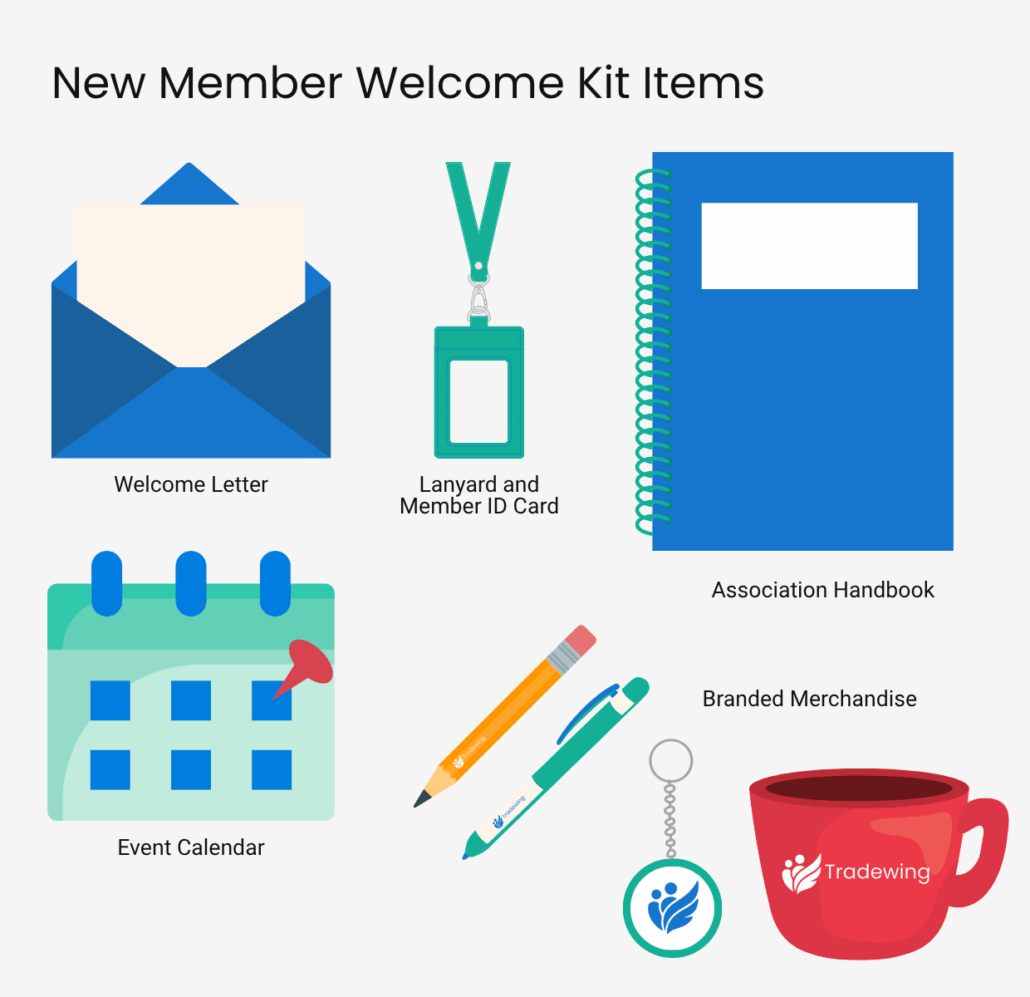
Outside of emails, there are a range of other ways to onboard new members. For instance, you might create a welcome video, host new member welcome events, and announce new members to your community. Some associations even mail out new member kits containing mugs, pens, a welcome letter, and other branded merchandise.

3. Encourage user-generated content.

Your association should regularly create content—whether it’s blog posts, training courses, virtual events, or something else—to maintain engagement. However, even with a dedicated content creation team, you’ll likely be unable to produce a continuous stream of posts to keep members engaged throughout the year.

Fortunately, you don’t have to. Consider how social media platforms like Instagram and Facebook very rarely have posts for the actual site maintainers. Instead, users are invited to create posts of their own. Your association can do the same! By encouraging user-generated content, your members can create content to engage one another.

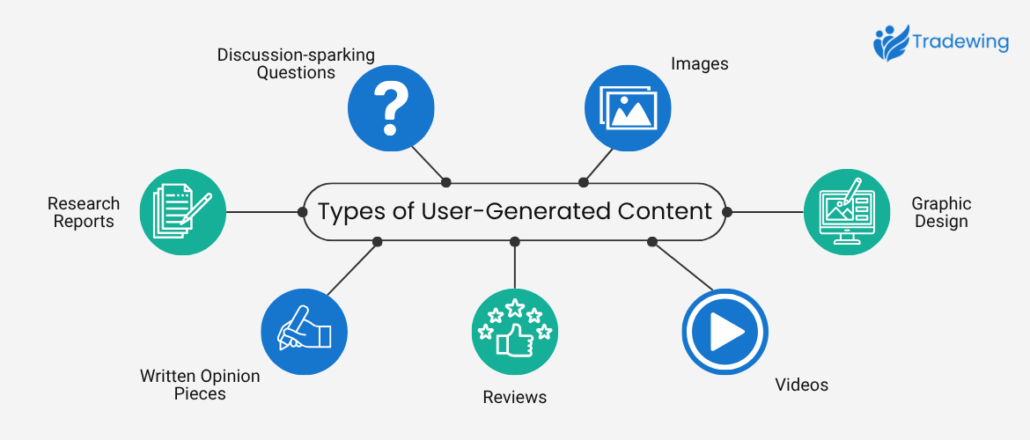
User-generated content can take many forms, including:

  • Images
  • Graphic design
  • Videos
  • Reviews
  • Written opinion pieces
  • Research reports
  • Discussion-sparking questions

To boost user-generated content, maintain an online community where members can easily share their creations and receive feedback from other members. You might also jumpstart the process by hosting competitions, posting discussion questions, or spotlighting model user-generated content.

4. Facilitate networking.

Many members join trade and professional associations to expand their networks. However, some members may need help figuring out where to start when it comes to reaching out. Additionally, associations have to balance encouraging member connections while protecting members’ privacy, which might make some members difficult to contact.

You can help members get around these obstacles and streamline the networking process by leveraging:

  • Suggested connections. Some associations set up programs where members can complete a short survey and have connections suggested to them or even have meet-ups arranged by your association. This process intends to pair up like-minded individuals and can be especially useful for new members entering your association with zero pre-existing connections.
  • Welcome events. If multiple new members join at once, host a welcome event or take time at your next event to introduce your new members to the rest of your community. This provides new members with a face-to-face opportunity to mingle.
  • Members-only spaces. In your online community, give members the opportunity to post publicly and engage with others in a low-stress environment. For example, you might invite discussion in the comments below a recent blog post. This gives members a natural opportunity to find others with shared interests and start conversations.

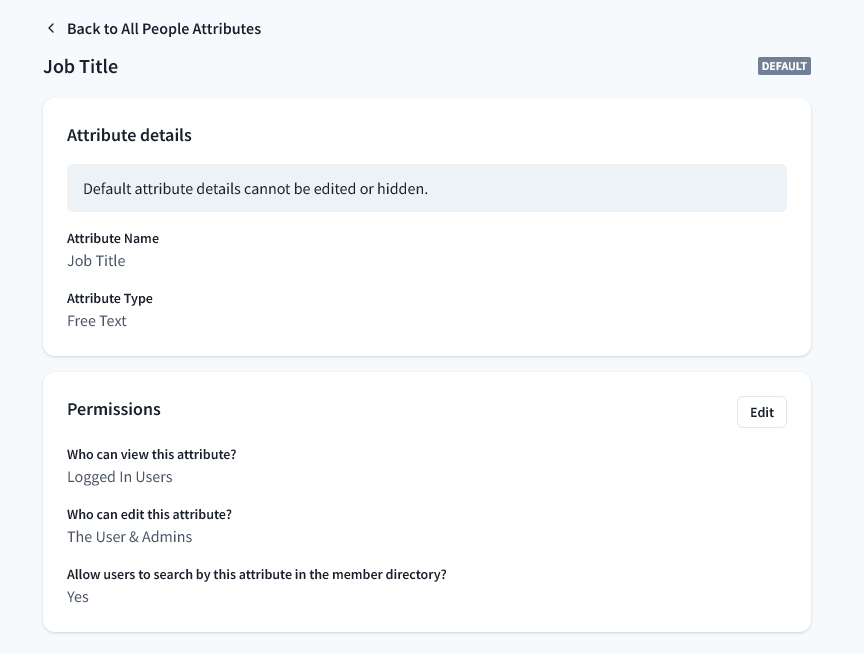
To help all members continually network, maintain an online membership directory where members can search for one another and send messages. Enable members to decide what information they want visible on their profiles, such as their contact information, job position, alma mater, professional interests, and personal hobbies.

5. Leverage gamification tools.

Gamification is the inclusion of game design elements in non-game contexts. For example, an association might create a reward system where members can earn points for posting content, attending activities, and logging into their online member portal every day.

Gamification incentivizes member participation in your association, pushing them to make additional comments, posts, and content to hit the next level, rise on the leaderboard, or earn a badge. A few gamification features you can add to your association’s online community include:

  • Badges. Acknowledge the actions your members take to engage with your association by awarding them badges, ribbons, trophies, stars, or any other virtual marker of success. These can be displayed on member profiles or next to their usernames when posting or commenting in your online community.
  • Leaderboards. Instill a sense of friendly competition by creating a leaderboard of all of your members. This allows members to see how they are performing in the “game” of engaging with your association compared to others and see their names rise up the ranks.
  • Rewards. While some gamification systems have no payoff other than the innate satisfaction of winning a game, you can attach tangible prizes to your gamification strategy. For example, you might show your appreciation for your community’s top posters by sending them a box of branded merchandise or offering a discount when it’s time to renew their memberships.

These elements boost engagement by adding an extra reward to participating in your community. Members have a record of their engagement, helping them quantify their participation and fostering a desire to continue adding to it.

6. Provide a late payment grace period.

The membership renewal process is a key moment for maximizing member retention, but it can also be used to boost engagement. In your association’s membership renewal letters, emphasize your various membership benefits, upcoming activities, and anything else valuable they can engage with if they continue their membership.

Additionally, offer members a grace period for missed payments before cutting off access to benefits. This gives members one final chance to see what they’ll be missing, which can encourage them to commit to another month or year of membership.

7. Contribute to a good cause.

Many businesses host corporate social responsibility (CSR) programs to boost their reputation and engage customers and employees. Associations can similarly engage their members and staff by scheduling activities related to giving back.

For example, your association might host an annual volunteer day related to your cause. To partner with a local nonprofit to organize a team volunteer activity for your members, follow these steps:

  • Survey members. Reach out to your members to learn what causes they want your association to support. Consider suggesting specific organizations in your local area or letting members share what types of nonprofit missions they prefer supporting. The cause you ultimately decide to go with might be related to your association’s regular offerings or simply something the majority of your members believe in.
  • Reach out to nonprofits. Contact nonprofits ahead of time rather than just showing up with a group of members to volunteer. This allows them to plan volunteer activities that accommodate a large number of people.
  • Work out logistics. Prior to your volunteer day, get a head count of the members committed to participating. Additionally, share other logistic details like you would with any other event, such as meet-up time, if food is provided, what attire participants should wear, and so on.

While volunteering might not be directly related to your association’s main benefits, it can still give members more than just a personal sense of fulfillment. After all, team volunteer activities are the perfect opportunity to network and build a sense of camaraderie. In fact, 35% of individuals volunteer specifically to socialize, and your members can do the same amongst themselves.

8. Stay up to date with industry trends.

Nearly a third of members at professional and trade associations say access to specialized and up-to-date industry knowledge is one of their reasons for purchasing a membership. As such, you should ensure you provide your members with relevant, valuable offerings that will aid them in their careers.

You can refresh your knowledge and develop expert content by:

  • Following industry blogs and news sites. Subscribe to journals, news sites, and industry blogs related to your association. Regularly reading up on the challenges, discoveries, and developments in your members’ fields will help you create offerings that speak to their interests, concerns, and questions.
  • Attending conferences. Participate in discussions in your industry by attending relevant conferences. This gives you and your association’s team opportunities to connect with other industry leaders, attend expert-led workshops, and hear on-the-ground stories from professionals.
  • Working with experts. Consider bringing in a variety of professionals to present at events, submit blog posts, and develop educational courses. This helps your association present different viewpoints and provide additional value to your members. Plus, advancing your association’s network of professionals benefits both your members and your organization as a whole.

When your association has cutting-edge content and activities, share them with members. Highlight these offerings through community announcements. This can also be useful content to promote on social media to attract new members.

9. Survey members.

If you’re not sure what type of content will engage your members, ask them. Create surveys that ask members about their experience with your association. You might ask them questions like:

  • In the past six months, what type of content have you engaged with from the following options?
  • What types of content have you found the most useful for you professionally?
  • How do you usually find out about current community offerings?
  • What types of member benefits would improve your experience?
  • On average, how often do you engage with community content?

Ask a mix of multiple-choice and short-answer questions. This allows you to quantify members’ responses while also giving them space to elaborate on their experiences.

10. Revamp your email strategy.

Many associations dedicate their resources to communicating with prospective or new members. However, your ongoing communications with existing members should be just as captivating.

Reinvigorate your email campaigns with eye-catching visuals and enticing subject lines. Break out of the traditional email format with interactive elements, like eCards, image carousels, or videos.

Additionally, determine a cadence for sending creative emails. For example, design holiday eCards to send on Valentine’s Day and Christmas. Or, plan an email series around the anniversary of your association’s founding that includes images and videos of founding members and background information on the organization.

More Member Engagement Resources

Associations with highly engaged members set themselves up for growth, earn more through their offerings, and cultivate a positive reputation in their industry. For professional and trade associations looking to improve their membership rates, start experimenting with engagement strategies and invest in the software you need to connect with your community.

For more member engagement resources, explore these guides:

Community Management Software for Associations: 10 Options

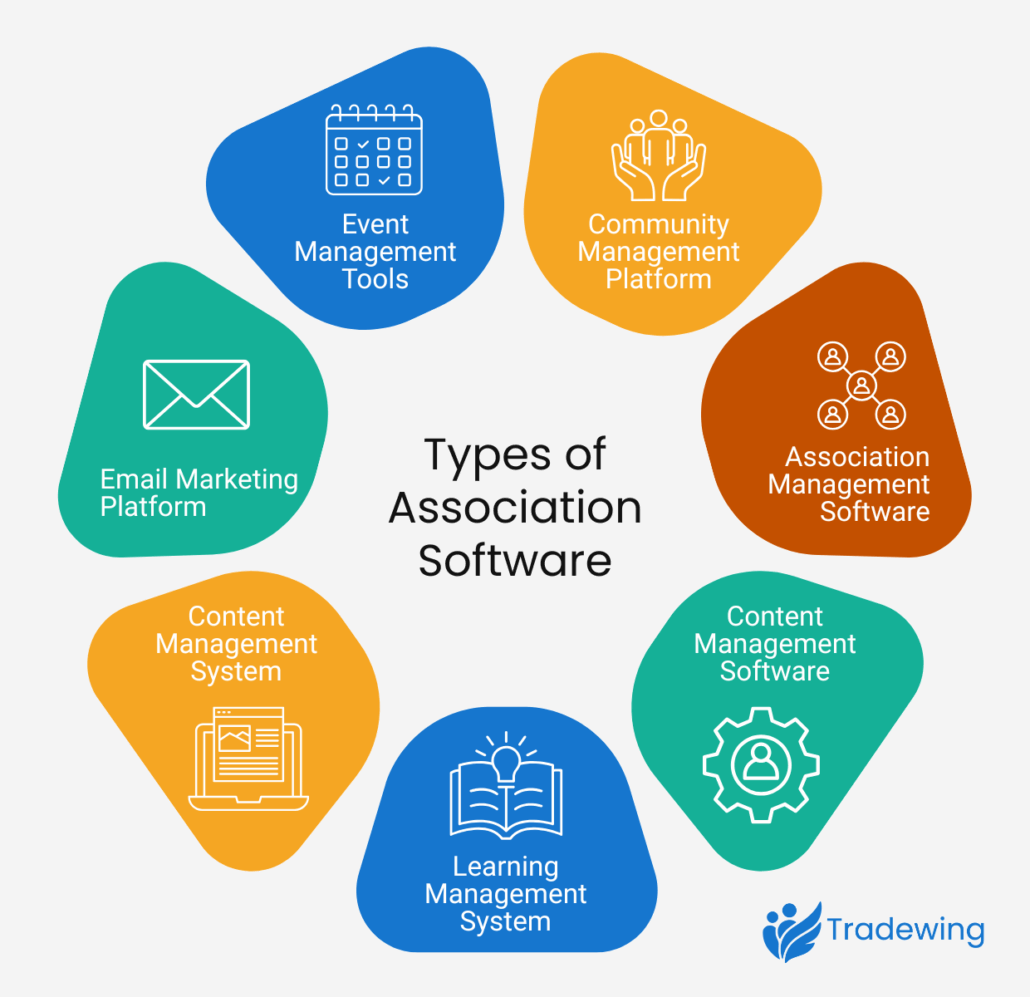
Your association’s community is one of its greatest strengths, but are you making the most of it? When it comes to association software, there are several types of platforms to consider, including tools designed to manage your community.

Community management software equips associations with the tools to engage members, encourage connections among one another, and foster a lively community.

To help you find the right platform for your association, we’ll explore 10 tools with community management features. But first, let’s explain exactly what community management software is.

What is community management software?

Community management software for associations enables organizations to bring their members together online. These software solutions usually create an online interface similar to a social media platform like Facebook or LinkedIn. While exact features vary from platform to platform, members usually have the ability to post content, comment on each other’s posts, and message one another directly.

Community management software differs from association management software (AMS) in that it focuses on the frontend user experience and is ultimately a tool for members to engage with. In contrast, AMSs include many backend features, such as dues management, event planning, and association-to-member communication.

In truth, there are actually very few platforms dedicated specifically to community management. As such, this guide will call out which tools are AMSs with community management features and which are true, dedicated community engagement software.

Best Community Software for Associations: Tradewing

Tradewing is one of the few community management software solutions on the market dedicated specifically to community engagement. Built for trade and professional associations, Tradewing provides an intuitive, out-of-the-box community engagement platform for fostering member engagement, maintaining active communication, and building your association’s community.

Pros

  • User-friendly. Tradewing is built so that members can pick it up quickly and start engaging with one another and your association’s team. If they’ve used social media before, using Tradewing should come second nature. Additionally, after just a few guided onboarding sessions, your association’s staff should be able to leverage the platform with ease, saving time and creating an association community that runs itself.
  • Member-focused. As mentioned, Tradewing is one of only a handful of community engagement-focused tools available. Tradewing’s platform gives members the tools to ask questions, share content, and make the industry connections they joined your association to secure.
  • Flexible. Outside of community engagement tools, Tradewing can also double as your virtual event platform. Host events through Tradewing’s conferencing software and promote upcoming activities through your new community social feed.
  • Cost-effective. When compared to other community management solutions, Tradewing is the cost-friendly option. With its focus on streamlined efficiency and additional event and email management tools, many trade and professional associations find Tradewing provides a greater return on investment than subscribing to several separate software solutions.
  • Integrations. Tradewing has AMS features, but if your association already has a dedicated AMS, Tradewing can integrate with your current system to provide community management features.

Con

Tradewing is primarily built for small and medium-sized associations. While Tradewing successfully powers nationwide associations like the American Association of Physics Teachers, enterprise-sized organizations looking for a fully customizable solution may need more robust platforms.

Best Community Management Software for Large Associations: Higher Logic

Higher Logic offers multiple engagement tools. Their Higher Logic Thrive solution is perhaps the best-known community management software currently available. Built for enterprise-sized associations, Higher Logic’s customizable solution powers trade and professional associations to build active member communities.

Pros

  • Customizability. If you’re looking for a community management solution to truly make your own, Higher Logic is the go-to solution. Higher Logic even assigns an expert advisor to all customers to provide guidance for implementing your platform.
  • AI-powered. Make managing your community easy with AI tools that help create automated newsletters, draft emails, and suggest post tags.
  • Gamification tools. Higher Logic enables associations to push their members to engage with badges, ribbons, and leaderboards.

Con

Higher Logic is built for large associations. This means it requires a degree of customization that may be unnecessary and costly for small and medium-sized associations. Additionally, Higher Logic’s complexities mean the backend is often unintuitive for most of your association’s staff, leading to unnecessary complications. Check out our list of Higher Logic alternatives for other platforms with comparable features.

Fonteva

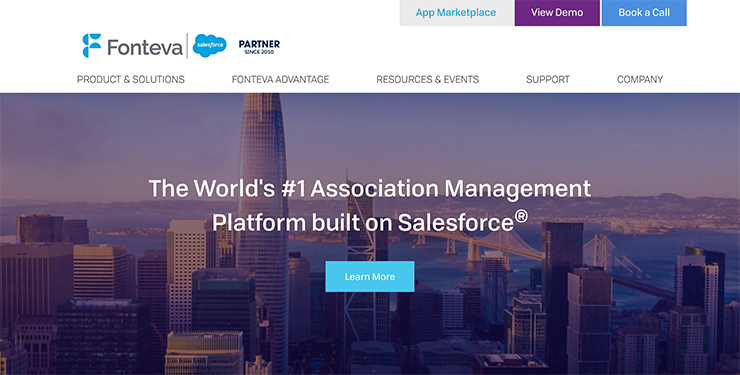
Fonteva is primarily an AMS, but it does include a handful of valuable community management features. Fonteva is also built on Salesforce, meaning associations interested in Salesforce can access a platform that transforms their Salesforce instance into a suite of association and community management tools.

Pros

  • Self-service options. Save staff time by providing members with a range of self-service tools, from setting up their profiles to managing their membership status.
  • Salesforce native. For associations already or interested in using Salesforce, Fonteva is a logical choice. Thanks to Salesforce’s regular security updates and wide library of apps, associations using Fonteva can rest assured their member data is secure, and they can experiment with various add-ons.
  • Scalable. As a Salesforce native solution, Fonteva is highly customizable and built to scale as your association grows.

Con

Fonteva is foremost an AMS. As such, its community management features may feel limited in comparison to a platform built specifically to host member communities. Fortunately, Fonteva integrates with a variety of other solutions, including Salesforce apps and third-party community engagement tools.

Best All-in-One Community Management Software for Associations: Glue Up

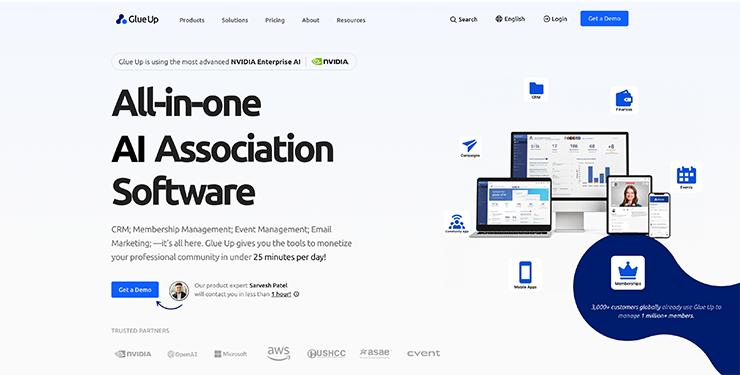
Glue Up is an association management software that offers numerous software applications, including CRM software, event management tools, and community management. For associations looking for an all-in-one solution, Glue Up may be a worthwhile investment.

Pros

  • Digital business cards. Members can network with one another by creating and sharing digital business cards, letting them connect on Glue Up’s community platform and meet up offline at their own discretion.
  • Custom privacy settings. While members want to connect with one another, your community management software should still have adequate privacy settings. Tools like Glue Up allow members to create private groups and determine who can see their information.
  • Phone app. Glue Up allows associations to create an app to host their communities. This way, members can log in and catch up with their community, no matter where they are.

Con

Some customers have expressed dissatisfaction with Glue Up’s emailing capabilities, citing struggles editing emails and managing notification settings. Additionally, while Glue Up offers a wealth of features, familiarizing your association’s staff with the platform can be challenging.

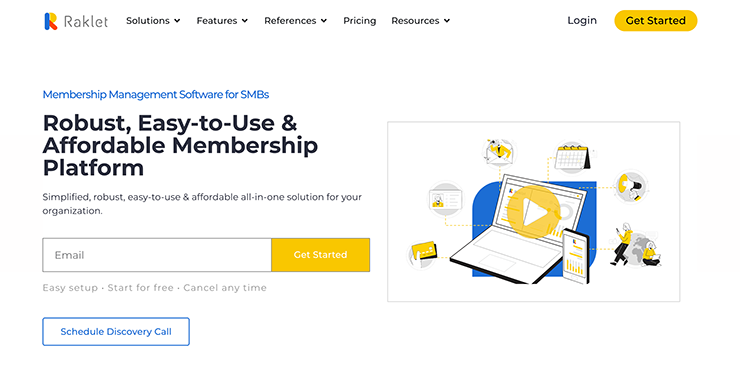
Best Community Management Software for Associations with Multiple Audiences: Raklet

Raklet is an all-in-one member management system, meaning it also includes community management features. Set up “boards” for your community to interact with one another and keep your members engaged.

Pros

  • Free price tier. For small associations looking for a basic community platform, Raklet has a free version. While features are limited, associations can still leverage basic community features at no cost.
  • Moderation controls. Keep your platform secure and fight spam with Raklet’s moderation control. Set whether content is available to the public or just your members and review comments before they go live.
  • Multiple content streams. Does your association support multiple audiences with unique interests? If so, Raklet allows you to create separate content boards for various topics, enabling members to follow the content they’re most interested in.

Con

Raklet’s most expensive tier may be out of reach for the smaller associations that will gravitate toward this platform, meaning its premium customization and security features may not be accessible to all customers.

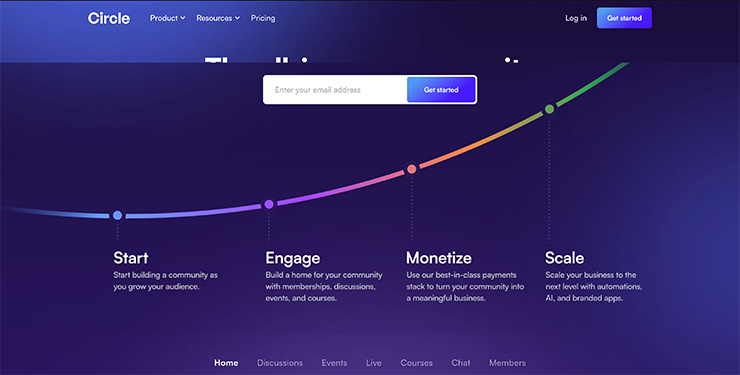
Best Community Management Software for Educational Courses: Circle

Unlike many of the platforms on this list, Circle is not designed explicitly for associations. Rather, Circle is a community management solution for all kinds of member-based organizations, including businesses, social clubs, and associations.

Pros

  • Interactive livestreams. Many of the community management solutions we’ve discussed so far have livestreaming and video conferencing features. Circle takes virtual events to the next level with immersive livestreams that can support multiple co-hosts and automated video transcripts to ensure all members can participate.
  • Educational course support. When it comes to content, Circle is particularly effective at sharing educational courses. Users can create cohort-based group discussions, create in-platform curriculum tools, and set up weekly office hours.
  • Supportive community. To get up to speed with Circle and ensure your association always maintains best practices, Circle hosts weekly trainings and workshops for the over 10,000 organizations also using the platform.

Con

Given that Circle is not designed specifically for associations, it may lack the capabilities associations and their members are used to, such as robust membership engagement tools and networking features.

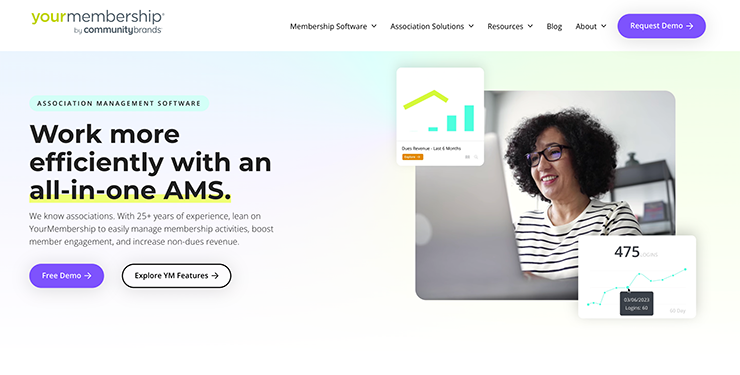
Best Community Management Software for Member Management: YourMembership

YourMembership offers both association management and member management tools, including community management software. The online platform claims it can “turn members into super members” by transforming sporadic conversations into long-term, dedicated engagement.

Pros

  • Sponsorship promotion. Associations looking to boost non-dues revenue can leverage YourMembership’s advertising and sponsorship recognition tools to secure mutually beneficial corporate partnerships.
  • Suggested connections. Help members shortcut the networking process with suggested connections that link them to members with shared interests.
  • Surveys. Not sure if your engagement strategies are resonating with your community? With YourMembership, you can reach out to members via surveys and polls to gather their feedback.

Con

YourMembership has been around for over 20 years, and its community interface may feel outdated when compared to modern community management solutions.

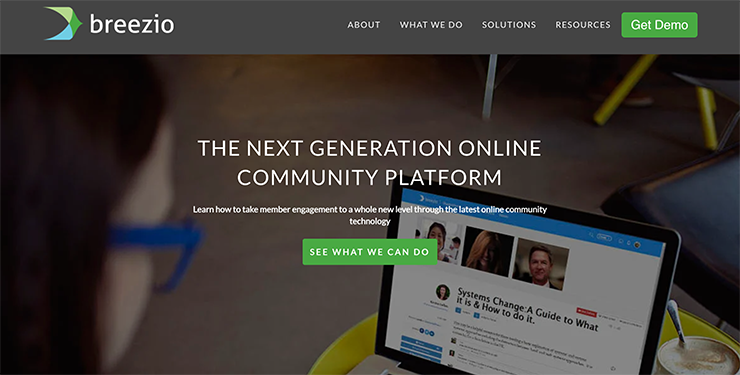
Best Lightweight Community Management Software for Associations: Breezio

When it comes to overlooked community management software, Breezio is one to keep an eye on. Breezio is a community engagement platform dedicated solely to bringing associations’ members together online to connect with each other and your organization’s content.

Pros

  • AMS integration. Breezio isn’t an AMS, but it does integrate with a wide range of AMSs and CRMs.
  • Single sign-on. As part of its many integration capabilities, Breezio has single sign-on technology, so you can start managing your community as soon as you log onto your AMS.
  • HTML-responsive content creator. If your team is handy with code, Breezio allows you to customize your platform exactly how you want it to look on every device.

Con

Compared to other community management software for associations, Breezio has a relatively small user base, meaning few reviews exist. Customers may struggle to compare their options and assess if the platform is right for them.

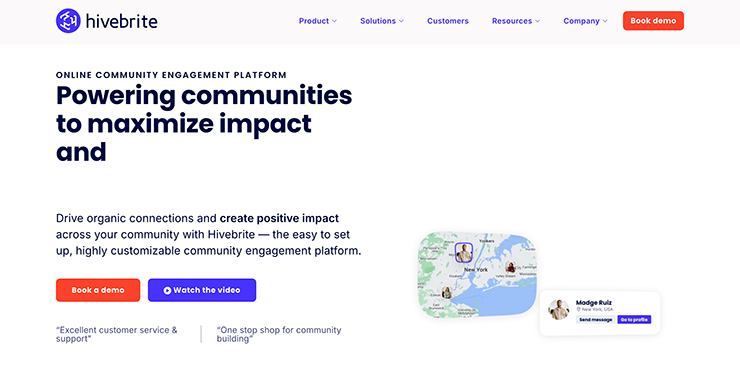
Flexible Community Management Software for Associations: Hivebrite

Hivebrite markets itself as the “most powerful solution” for community management and engagement. This billing is thanks to the platform’s extensive customization and flexibility options that allow it to serve commercial, nonprofit, education, and association audiences.

Pros

  • Customizability. Hivebrite allows associations to make the platform their own with extensive branding options.
  • Community matching.  Hivebrite has recently acquired an AI-powered community matching platform. Community matching asks participating members to fill out a short form with their interests and contact information. Then, the system connects them with members who share interests, automating the networking process.
  • Content library. Members can access archived content in  Hivebrite’s digital library. While you’ll ensure old content doesn’t go missing, members can easily find what they’re looking for.

Con

While Hivebrite does offer extensive customization options, some customers have found these challenging to navigate. Like with other platforms with extensive features, initial onboarding can be a long and tricky process. Consider going with one of these alternatives to Hivebrite for a better experience.

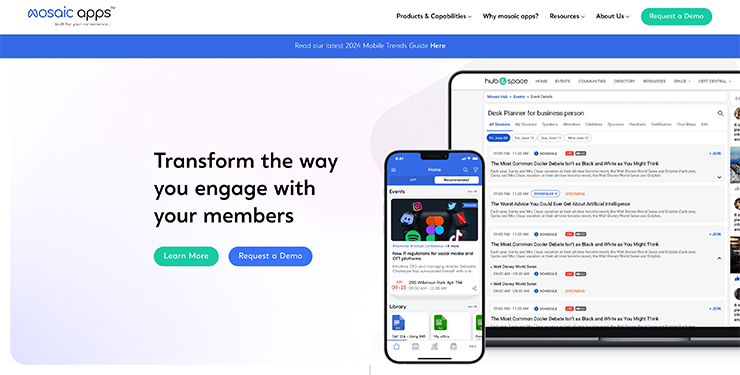
Best Mobile Community Management Software for Associations: mosaic apps

mosaic apps is a phone-based community management software. While most community management software has an app, mosaic apps is specifically designed for mobile users and provides an optimized experience for on-the-go users.

Pros

  • Robust event hosting. mosaic apps is ideal for hosting virtual and hybrid events with optimized pre-event messages listing schedules, presenters, sessional evaluations, and more. For the events themselves, associations will have access to livestreaming, live chats, and event recording options.
  • Secure. To keep your members’ data safe and protect your members’ privacy, mosaic apps is ISO 27001 certified and complies with General Data Protection Regulation laws.
  • App-oriented. mosaic apps works on desktop, but it excels in its app form. Additionally, if your association needs an app with features mosaic apps doesn’t currently offer, you can reach out to them to develop a custom app.

Con

Due to its app focus, mosaic apps lacks integration capabilities, making it hard to connect other association management software to it.

More Community Management Resources

Community management software transforms your association’s community, allowing disparate members to come together online. Research various community management platforms to find a solution that fits your needs, budget, and association type.

To build a thriving community with the right software and strategies, check out these free resources:

Why Driving Renewals Will Be More Difficult Going Forward

2020 was a challenging year for associations. That’s hardly news, but what may surprise you is the pandemic’s long-term impact on your association’s ability to drive membership renewals.

While the worst is, hopefully, behind us, the last year has cast a bright and unflattering light on the cracks in the foundations of organizations everywhere. Nowhere has this been more visible than when it comes to benefits and the member experience.

You might think this doesn’t apply to you. Maybe you managed to transition to Zoom just in time for that big event, or perhaps you think post-COVID everything will return to normal, but the story here isn’t about how you and your members dealt with, and survived, these inconveniences in 2020, it’s about why these inconveniences arose in the first place, and what that says about being a member of your association.

What’s the Point of Association Membership in 2021?

Unless association membership is a requirement in your industry, you understand how critical it is for members to understand the value they’re receiving from your organization when it’s time to renew. If they’re not getting much out of it, why should they share their hard-won dollars with you?

This year’s renewal conversation is about to get a lot more challenging.


How you navigated 2020 will make or break how members answer the question above, but there’s more to it. For many of your members, this is more than just a question of if they want to stick with you this year, but if you’re even still relevant.

Let’s look at a few common areas most associations struggled with this year, and how those struggles could translate into a decline in renewals.

Challenges Faced by Associations in 2020 

Events – This is the big one, any association that relied on in-person events and meetings to facilitate member networking and provide other benefits (like training), faced a major crisis this year. Some successfully moved events online while others cut events all together.

Yet, even those that managed to get everyone together on Zoom noticed the shortcomings of this response. Many virtual events platforms, especially the free ones, aren’t built to support the unique needs and services associations require to serve their members. Breakout sessions, training workshops, hallway conversations, and even expo halls fell short of expectations for almost everybody. These lackluster experiences really pushed members to ask, were these events even worth it to begin with?

In-person events will never be the same. Are you ready?


Collaboration – Cross-member collaborative efforts also took a hit. Networking opportunities were few and far between, and for many associations, the online tools provided to members to connect started to show their age.

Listservs and ancient forum software were barely hanging on before, but they should be dead and buried after this year. Unfortunately, many associations learned the hard way how ill-prepared they were when these avenues became the only real lifeline for their members in the midst of the pandemic. Difficult to navigate interfaces that lacked the capabilities necessary to foster meaningful and effective communication between members had users throwing up their hands and walking away. Even worse, some associations saw their members leave and start their own industry-focused LinkedIn and Facebook groups.

The Sponsor Experience – Got sponsors? Maybe not anymore. The loss of events has highlighted for many sponsors just how little they’re getting out of their associations beyond a booth or signage at the yearly conference.

While this won’t impact member renewals, sponsor renewals can be just as critical, and are just as at risk after this year. Not only have sponsors likely had to pull back on their own promotional budgets due to COVID, but a lack of events or other meaningful sponsorship avenues in 2020 saw sponsors committing their advertising dollars elsewhere, and it could prove a challenge to coax that investment back – especially if the results of those new investments look promising.


Locking In Renewals for 2021 and Beyond

Obviously 2020 was bad, but what can we do about it?

The answer is a lot, and you’ve likely already made moves to address the challenges above and other deficiencies that came to light last year. Still, here are three things you should give some thought to right now that will not only help you patch the holes made by COVID, but give your members a stronger incentive to renew now and in the future.

Three tips for driving membership renewals this year.


  1. Evaluate Your Collaboration Tools – Your membership experience is only going to become more virtual, 2020 only sped up the timetable. Ask yourself, are you ready? Can a virtual member get as much value as a member that can engage with others regularly face to face? If not, why? If you’re still working with just a website or a listserv, it’s time for a change. Start thinking about ways you can expand your digital resources. For some, a LinkedIn group or regular virtual happy hours might be a good first step, but ultimately you’ll want something more scalable and tailored to your association’s specific member needs.
  2. Expand Your Sponsor Benefits – If you think events, website banners, and newsletter links are the only tools at your disposal for rewarding your sponsors, think again! New technologies abound when it comes to tools that allow you to provide sponsors closer access to your members in a controlled way. Your membership platforms may already have these capabilities, and if not, it’s time to look for solutions that do.
  3. Modernize Your Event Strategy – Like it or not, virtual events are here to stay. Even if you plan to move back to in-person events, there are many folks who may now prefer the flexibility and cost-effectiveness of attending virtually. Consider a hybrid event plan, and understand what resources you might be missing to create a seamless experience for both in-person and virtual attendees.


2020 was a tough year, but 2021 doesn’t have to be. Associations are in a great position to revitalize their industries and provide critical and immediate value to their members. COVID was a wakeup call to everybody; use this moment to help your members and sponsors understand that one of the best investments in their future is membership with your association.