How Recurring Payment Software Can Simplify Dues Collection
For lean association teams, dues collection can create more administrative work than…
September 21, 2026
A member’s relationship with an association rarely changes all at once. It develops over time, through patterns of participation, interest, and sometimes gradual disengagement.
Associations capture many of these interactions, but much of that information is reviewed in isolation. Your association management software may tell you who renewed. You community engagement platform can show you who is participating. Event and learning systems capture another set of interactions. Each provides useful information, but looking at them separately makes it difficult to understand how a member’s relationship with the association is changing over time.
This is where member analytics becomes valuable. It helps associations look beyond individual transactions and begin connecting behavior across the member experience.
In this guide, we’ll explore everything you need to know about member analytics, from what it is to how to implement a robust management strategy. We’ll cover:
When your association collects, analyzes, and understands its data, your organization will have all the information it needs to grow and build lasting member connections.

Member analytics is the process of collecting and analyzing data on how members interact with an association’s resources, events, and community. By measuring real-time behavioral data across multiple platforms, your association can uncover valuable insights to improve the member experience and proactively reduce churn.
Reporting tells you exactly what happened in the past, while analytics explains why it happened. For example, a report might show you how many members renewed or lapsed last year.
Meanwhile, analytics is the process of assessing data to identify patterns. In this case, you might notice that 85% of lapsed members hadn’t logged into the member portal [Tradewing team – we can link the member portal software article here once it’s pushed live] at least six months before their renewal date.
The most important metrics for each association vary, depending on the organization’s current goals. However, if you want to gain insight into your association’s overall health, focus on:
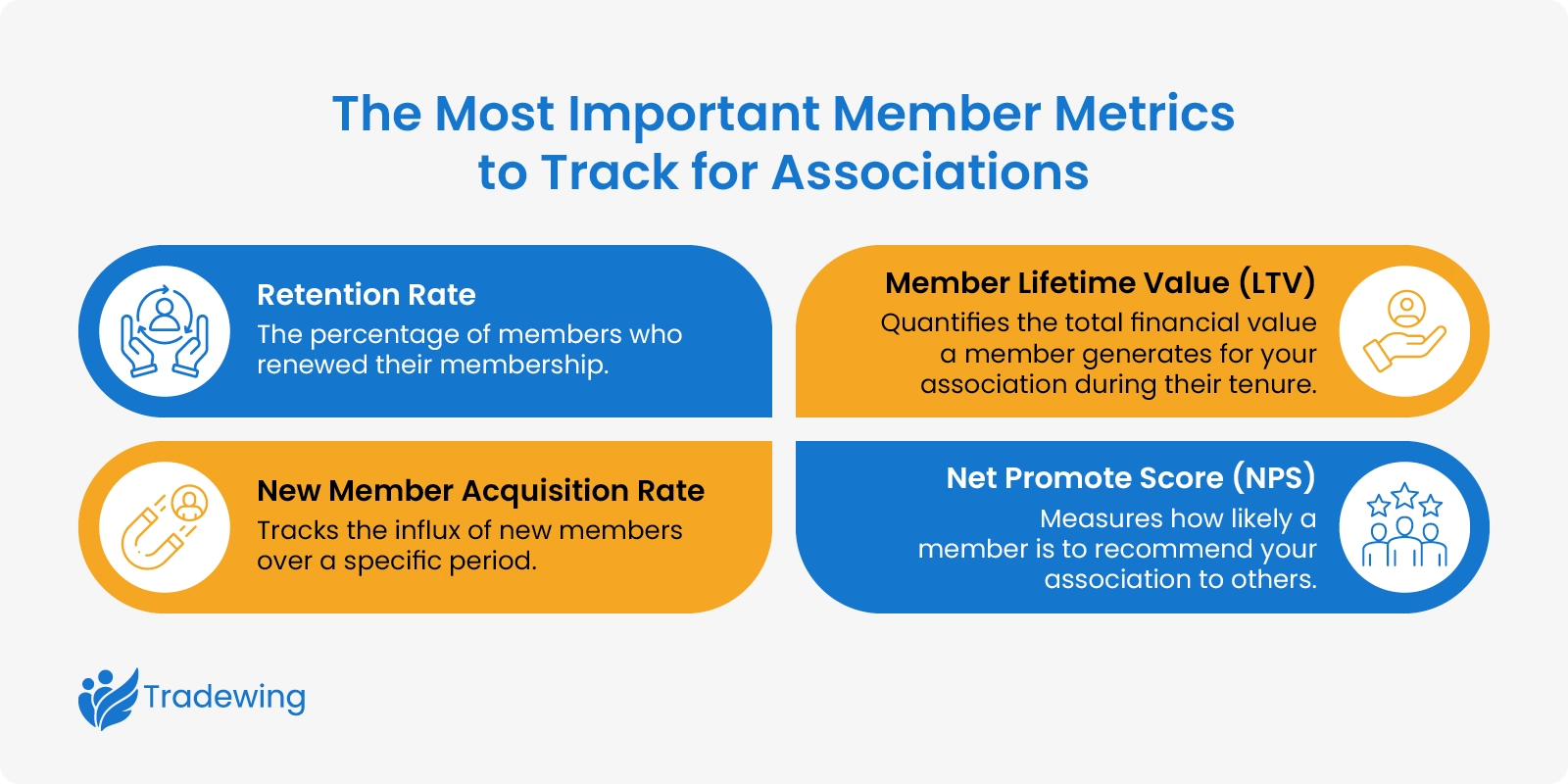
You don’t necessarily need a separate tool to analyze your member analytics. If you already have an AMS and a community platform, these solutions may already provide useful reporting. What matters is whether those systems work together. When member data and engagement activity remain separated across platforms, each dashboard only shows part of the member experience.That way, data syncs regularly, so you’ll always see the full picture of your association’s membership health.
By analyzing member behavior, your association can determine exactly how members engage with your offerings, how satisfied they are with your membership program, and if they are likely to renew.
It may help your team recognize a change in participation before renewal. It may show that a program assumed to be popular is reaching the same small group of members repeatedly. Or it may reveal that members are finding unexpected value in an offering that receives relatively little attention from staff.
To be more specific, here are some of the ways member analytics helps associations beyond attendance totals, registrations, and renewal rates:
Member analytics enables you to allocate financial resources more effectively. The data shows what’s working and what needs improvement, so you can adjust your marketing strategies accordingly.
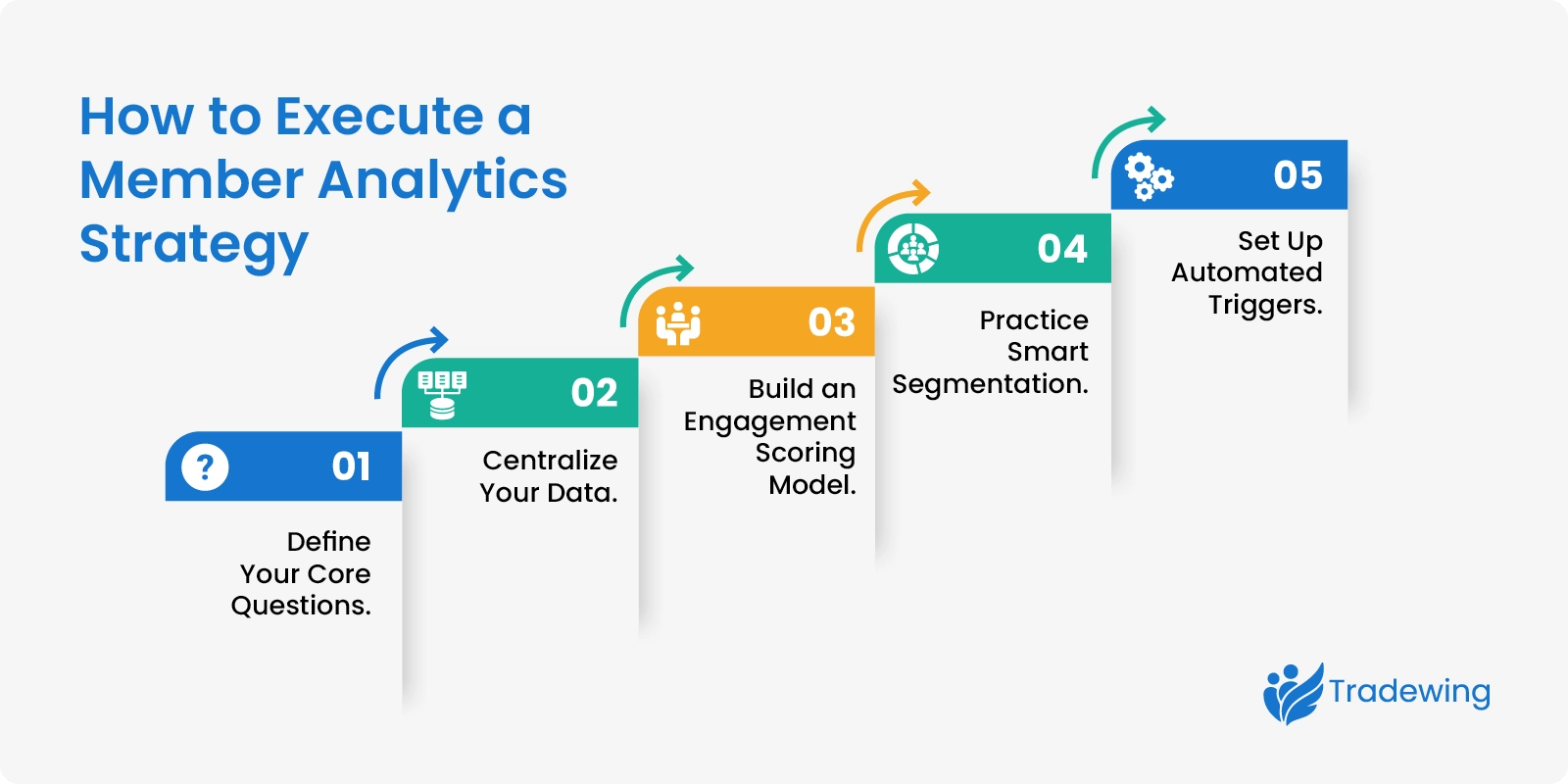
It is easy to open an analytics dashboard and start looking for something interesting. A better place to begin is with a question your association actually needs to answer.
Consider your association’s goals and what data can help you achieve them. For example:
The key to member analytics analysis is to ask focused questions. They also make it easier to distinguish between a pattern worth investigating and a metric that happens to look interesting on a dashboard. Simply checking if member retention went up or down in a given year should be your starting point. One caution is important: correlation should not be mistaken for causation. If members who attend orientation renew at a higher rate, orientation may be contributing to that result, or those members may simply have been more engaged from the beginning.
Member analytics is only as useful as the data behind it. Once you’ve centralized your data, you’ll also need to practice good data hygiene. Some helpful tips and tricks include:
Take the time you need to thoroughly audit your integrations. Doing so ensures critical data flows freely and accurately to give your team a more reliable foundation for member analytics.
An engagement score helps associations gauge each member’s different forms of participation to their organization. This model assigns point values to various member actions over a rolling period (usually around a year).
Not every action represents the same level of engagement. Opening an email is useful information, but it is a different signal from completing a course, volunteering for a committee, contributing to a community discussion, or attending the annual conference.
The actual rubrics vary from organization to organization, but yours can look like this:
Use these scores to identify members who are highly engaged and members at risk of lapsing. With this information in mind, you can then plan tailored marketing campaigns that resonate with each group. For example, highly engaged members can receive newsletters encouraging them to attend an exclusive webinar featuring a panel speaker at your conference, while those who haven’t interacted in a few months can get a “We miss you” message along with a reminder of all their membership benefits.
It is also important to look beyond the score itself. A member with a high engagement score that has been steadily declining may warrant more attention than a member with a lower but steadily increasing score.
The direction of engagement can sometimes tell you as much as the total.
Traditional member segmentation often begins with information associations already have: membership type, geography, career stage, industry, or job title. With member analytics, you can take your segmentation process to a whole new level. Start grouping your members using specific, behavior-based criteria, such as:
As your member base evolves over time, reconfigure your audience segments to match their new interests. For example, when a new technology rolls out, all members may be interested in taking courses related to it. Then, in a few years, only new members of your field will have need of these courses.
Analytics has limited value if nothing happens after the insight reaches the dashboard.
Once you’ve identified critical member behavioral patterns, you can then use your AMS, member engagement platform, or marketing automation tool to set up workflows that trigger automatically based on specific member actions.
If you’re unsure of how to get started with automated triggers, consider the following examples:
Automation can make these responses more consistent, but not every signal should trigger another email. In some cases, the appropriate response may be a staff conversation, a program change, or simply watching the pattern over a longer period.
When mapping out your broader automation strategy, create a comprehensive visual flowchart to document each trigger point. Doing so prevents overlapping outreach and ensures maximum clarity.

Member data is often organized around the systems that collect it. Members, of course, do not experience an association that way.
The same person may attend a webinar, participate in a community conversation, enroll in a course, download a resource, and attend an event. Looking at those activities separately can make an active member appear as a collection of unrelated transactions.
Tradewing’s Engagement Intelligence is designed to help associations connect those engagement signals and develop a more useful view of member participation. Rather than treating analytics as an administrative or record-keeping task, we focus on measuring real-time behavioral data.
Our approach provides associations with:
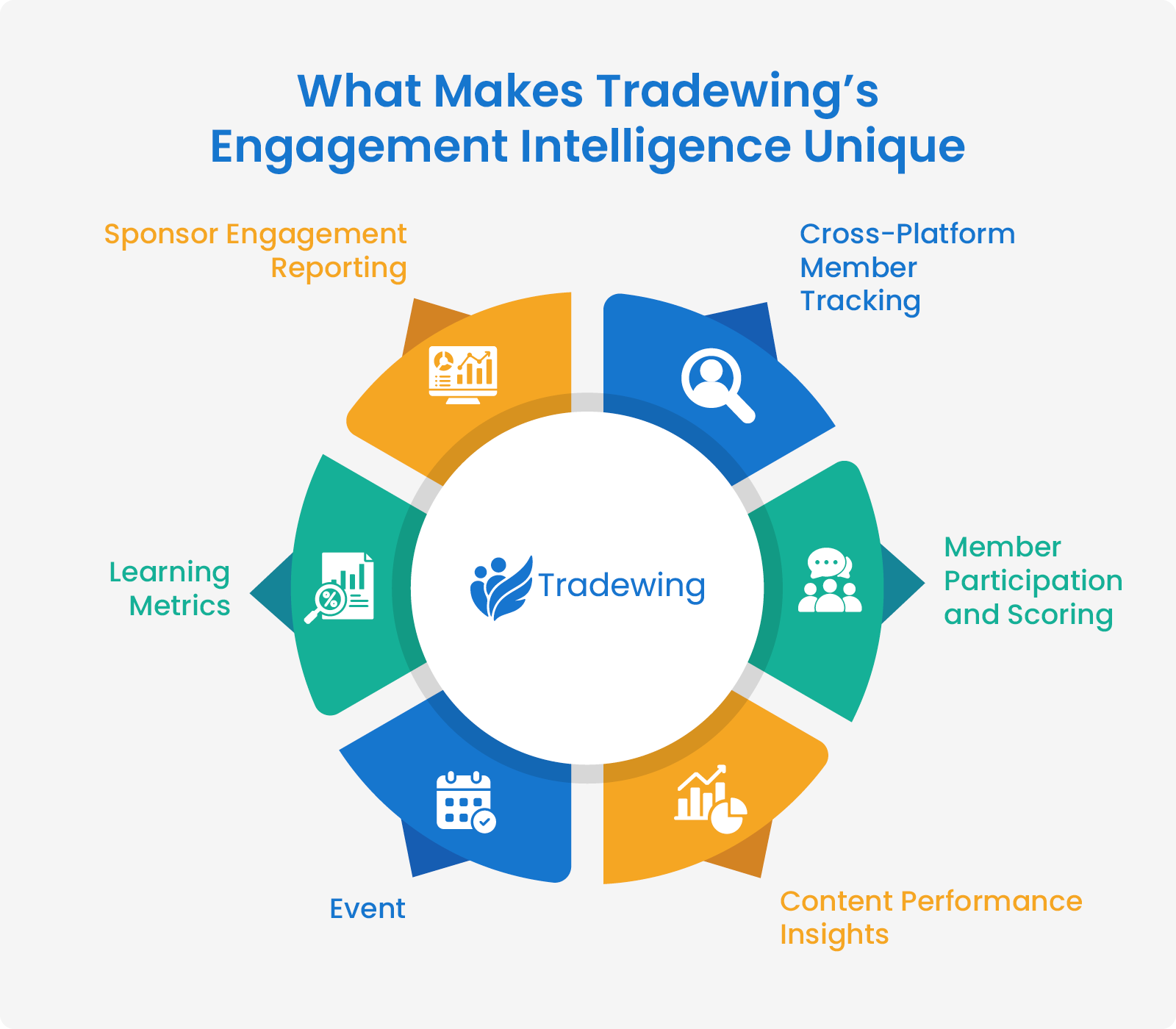
The value is not simply having more data in one place. It is being able to see relationships between activities that would otherwise be evaluated separately. By getting a 360-degree view of your association’s member experience, you’ll be able to make smarter decisions that optimize your operations and scale your community.
Member analytics gives your association the data-backed insights it needs to provide valuable benefits, engage members, and create a better membership experience.
Renewals, registrations, course completions, community activity, and content engagement each provide useful information. Viewed together, they can reveal patterns that are difficult to see when every program is measured separately.
Tradewing’s Engagement Intelligence helps associations today to proactively spot at-risk members, double down on valuable content, and systemize your retention strategy. Connect member participation signals so teams can recognize meaningful changes in participation, understand where members are finding value, and decide where attention is needed next.
For more member engagement tips, explore these resources:


Rhona is a Marketing Specialist at Tradewing, creating content and campaigns that help associations strengthen member engagement, simplify communications, and support long-term growth.

For lean association teams, dues collection can create more administrative work than…
September 21, 2026
Did you know that many professional organizations experience a severe drop-off in…
September 8, 2026
Traditionally, member portals for associations were built for basic administrative tasks. Members…
August 27, 2026